Lamia Tazi Chairwoman & CEO · Sothema Contact

Pharmaceutical Industry & Healthcare

The sector, and why it is treated as strategic

Lamia Tazi’s field is one of the few industries where a manufacturing decision and a public-health outcome are the same decision. This page sets out the sector as it actually functions in Morocco and the wider region.

Morocco · the pharmaceutical sector in figures

~65% of the domestic pharmaceutical market supplied by local production Ministry of Industry & Trade
~10% of national pharmaceutical output directed to export markets Ministry of Industry & Trade
70+ countries reached by Moroccan pharmaceutical exports Morocco Now / sector reporting
14–15bn Moroccan dirhams — estimated annual turnover of the sector Sector reporting

Structure

An industry built on permission

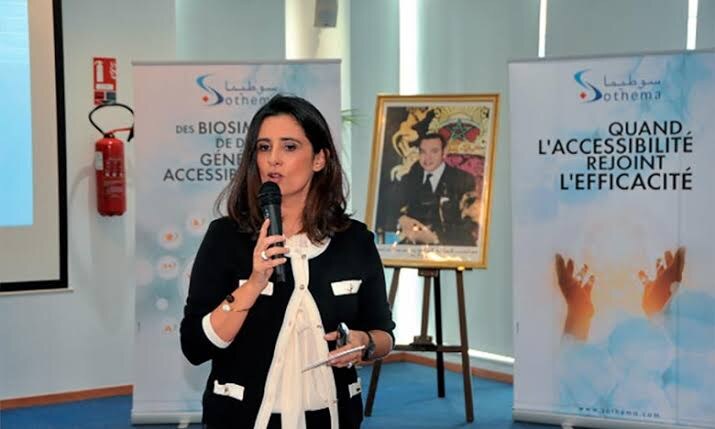
Lamia Tazi addressing an audience at a Sothema launch focused on accessibility and efficacy
At a launch built around accessibility and therapeutic efficacy.

Nothing in this industry happens because a company decides it should. Every product, every process and every site exists because a regulator has permitted it — and continues to permit it.

A pharmaceutical manufacturer operates inside a layered permission system. The site itself must hold a manufacturing authorisation and demonstrate compliance with Good Manufacturing Practice, verified by inspection. Each individual product requires its own marketing authorisation in each individual country, supported by a dossier covering quality, safety and efficacy. Each production process must be validated and re-validated. Each batch must be released by a named qualified person before it can leave the site.

This is why Lamia Tazi’s pharmacy qualification and her years as Sothema’s responsible pharmacist are structurally significant rather than biographically decorative. The responsible pharmacist is the human being at the end of that permission chain.

Morocco’s position is unusual for the region

Around fifty manufacturing establishments operate in the country, together covering roughly 65 to 70% of domestic medicine demand and exporting about a tenth of output. Moroccan pharmaceutical products reach more than seventy countries across Europe, Africa, the Middle East, Asia and North America. Sector turnover is estimated at 14 to 15 billion dirhams.

Against the continental picture — where more than 70% of medicines consumed are imported — that degree of self-supply is the exception rather than the rule, and it is the product of five decades of deliberate industrial building rather than of any recent policy.

The Moroccan Federation of the Pharmaceutical Industry and Innovation, in which Lamia Tazi serves as Vice-President, represents 34 operators covering more than 75% of the sector’s revenue — which makes it the body through which the industry negotiates with the state on pricing, procurement, registration and industrial policy.
Capability

What a manufacturer at this level can actually make

The distance between a tablet line and an aseptic biologics suite is the distance between two different industries.

Tier 01

Generics and solid forms

The volume base of any national pharmaceutical industry — tablets, capsules, oral liquids, topicals. Technically demanding at scale, but achievable for most established manufacturers. This is where the cost of a health system is decided.

Tier 02

Sterile injectables

Aseptic manufacturing requires clean-room classification, environmental monitoring, media fills and process validation of a different order. Sothema’s specialisation in aseptic environments is what unlocks everything above it.

Tier 03

Biologics and biosimilars

Insulin, heparins, monoclonal antibodies, oncology biosimilars. Living systems rather than chemical synthesis; comparability rather than identity; capital measured in years. Sothema is described as the sole producer in Morocco of several of these categories.

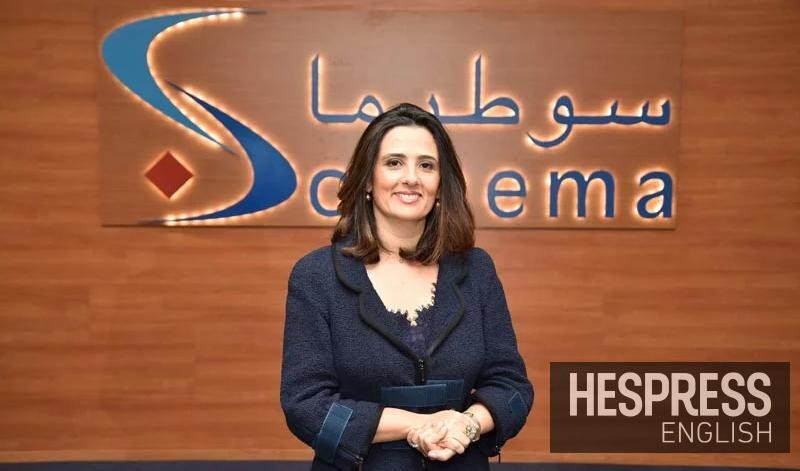
Lamia Tazi photographed in front of the Sothema corporate identity
  • Pharmaceutical forms manufactured13 forms
  • Production units operated by the group8 units
  • International laboratories served under contract35+
  • Principal manufacturing site60,000 m²

Bar lengths are indicative of relative scale within this page only and are not comparative industry benchmarks. Figures are drawn from Sothema, Forbes Middle East and World Bank Live profiles.

Business Model

Why making other people’s medicines makes your own better

Sothema operates simultaneously as the owner of its own portfolio and as a contract development and manufacturing organisation for more than thirty-five national and international laboratories — a client list that has been reported to include major research-driven groups such as Novartis, Sanofi, Amgen, MSD and Sandoz.

The commercial logic is straightforward: contract work fills capacity, smooths demand and generates hard currency. The strategic logic is more interesting.

Three things contract manufacturing imports

  • Audit pressure. A multinational principal audits its contract manufacturer to its own global standard, repeatedly. Passing those audits year after year forces a quality system to a level that domestic regulation alone would not require.
  • Technology. Manufacturing another company’s complex product means receiving its process, its analytical methods and its know-how. Executed under a proper technology-transfer agreement, that capability remains in the receiving plant.
  • Credibility. A site that manufactures for the world’s most demanding customers carries an implicit reference into every regulatory conversation and every new market.

That accumulated capability is then available to the company’s own portfolio — which is how a manufacturer in Bouskoura ends up producing oncology biosimilars for markets that would otherwise depend entirely on imports.

Access

The economics that decide who gets treated

Affordability in medicine is not a discount. It is a manufacturing outcome.

Structural cost factors in medicine supply
FactorEffect on price and availabilityWhat local manufacturing changes
Imported finished product Adds freight, tariffs, currency exposure and distributor margin to the ex-factory price Removes most of that stack; the price paid is closer to the cost of making it
Imported active ingredients Africa imports more than 95% of its APIs, principally from India and China — exposing local production to foreign pricing Reduces but does not remove exposure; API capability remains the continent’s deepest gap
Currency volatility Devaluation raises the local-currency price of imported medicine immediately Domestic manufacture insulates a share of the health budget from exchange-rate movement
Originator biologics Prices set for high-income reimbursement systems; often unaffordable at scale elsewhere Locally made biosimilars have been reported by Sothema to reach six times more patients at the same quality
Supply interruption Export restrictions and freight failure translate directly into stock-outs Domestic plants can be prioritised for domestic need — the pandemic’s clearest lesson

Momentum in the sector

Pharmaceutical manufacturing has been among the strongest performing parts of Moroccan industry in recent reporting periods, recorded at 28.9% growth in the fourth quarter of 2025 within national manufacturing output statistics. Planned development of the pharmaceutical ecosystem has been projected to create between 4,700 and 5,000 new direct high-value jobs.

Those are the numbers that make the industrial case. The public-health case runs alongside it, and Lamia Tazi’s public argument has consistently been that the two cannot be separated.

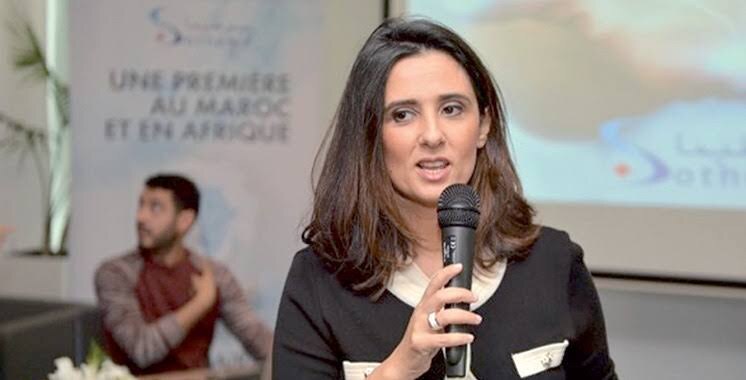
Lamia Tazi speaking with a microphone at a Sothema event marking a first for Morocco and Africa
Announcing a manufacturing first for Morocco and for Africa.