Biography & Career Journey
From the quality
system to the chair
A career told in sequence — the training, the entry, the statutory accountability, the two decades of operating responsibility, and the succession that placed her at the head of Morocco’s leading pharmaceutical manufacturer.
Chapter I
01
Liège, Belgium — the scientific formation.
A degree that decides the rest of a career
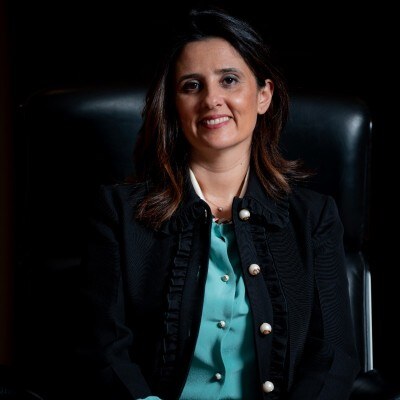
Lamia Tazi trained as a pharmacist at the University of Liège in Belgium, one of the long-established European faculties for pharmaceutical sciences. A pharmacy degree is not a general business qualification. It is a licence into a regulated profession, built on chemistry, pharmacology, galenics — the science of turning an active molecule into a stable, dosable, administrable medicine — and on the legal framework that governs how medicines may be made and released.
That formation shapes what a manager can and cannot do later. In the pharmaceutical industry the most consequential decisions are technical before they are commercial: whether a process is validated, whether a stability profile supports a shelf life, whether an ingredient supplier can be qualified, whether a deviation is minor or reportable. An executive without that literacy is dependent on translation. An executive with it can interrogate the evidence directly.
It also explains a pattern visible across her later public work. Where many chief executives in the sector speak the language of markets and margins, her published statements consistently return to capability — what can be made, where, to what standard, and for whom.
Chapter II · 1997–1998
Joining Sothema, and signing for it
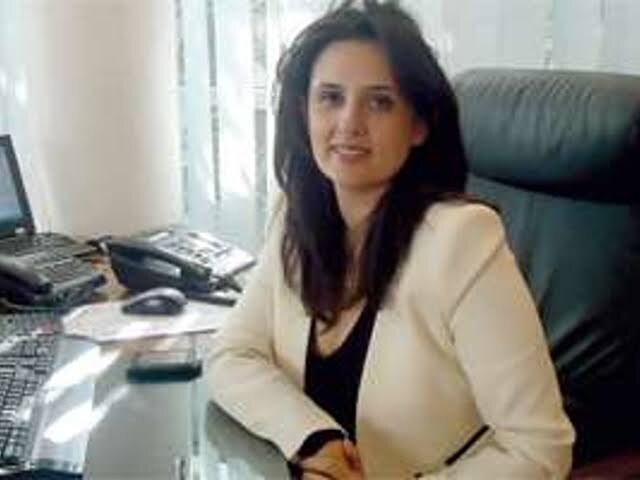
She joined Sothema in 1997. Reporting on her early years describes her entry into the company as executive assistant to the chief executive — a vantage point that shows an entire business at once, but confers no authority of its own.
In 1998 she took up the role of responsible pharmacist. This is the pivotal fact of her early career and it is routinely underweighted. Under Moroccan pharmaceutical law, as under the equivalent European regime, a manufacturing establishment must designate a qualified pharmacist who is personally accountable for the conformity of what it produces. That person signs. If a batch should not have been released, the responsibility is not diffused across a committee.
Holding that office inside a family-founded company where she also bore the founder’s surname was a particular kind of test. It placed her under the same regulatory obligations as any other qualified person in the industry, assessed by inspectors who are indifferent to shareholding.
The company’s own record indicates she continued to hold the responsible pharmacist role even after her promotion to general management — an unusual continuity of technical accountability.
Chapter III · Two decades
Managing Director:
the operating decades
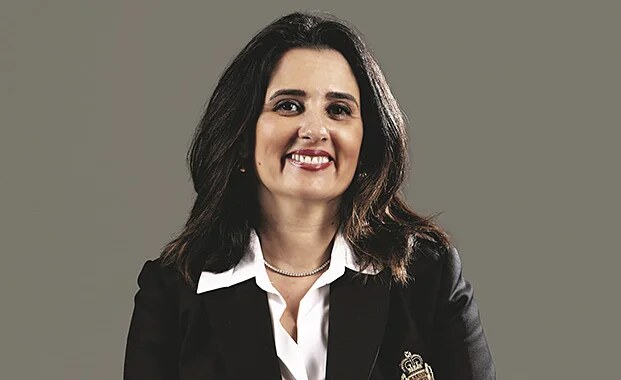
Promotion to Managing Director gave her responsibility for the whole operating span of the business: production planning across multiple units, the supply of active ingredients and excipients, quality assurance, export registration in dozens of jurisdictions, and the commercial relationships with the multinational principals for whom Sothema manufactures under contract.
The scale of what changed during these years is measurable. Reporting on her tenure describes Sothema’s turnover multiplying more than sixfold, and the company moving from 165th to 57th place in the ranking of Morocco’s five hundred largest enterprises. A pharmaceutical manufacturer does not grow at that rate by pricing. It grows by adding capacity, adding registrations, adding markets and adding categories.
Three structural moves
- Into biologics. Aseptic manufacturing capability that allows production of insulin, heparins and monoclonal antibodies — categories most manufacturers on the continent do not attempt, because the capital and quality thresholds are punishing.
- Into contract manufacturing at scale. Building a client base of more than thirty-five laboratories, which imports the audit and quality expectations of the world’s most demanding customers into the company’s own systems.
- Into the region. Establishing production in Dakar and offices in Côte d’Ivoire and Cameroon, converting export relationships into industrial presence.
By the time the chairmanship became a question, the operational case had already been made in the ledger.
Chapter IV · 2019
The succession
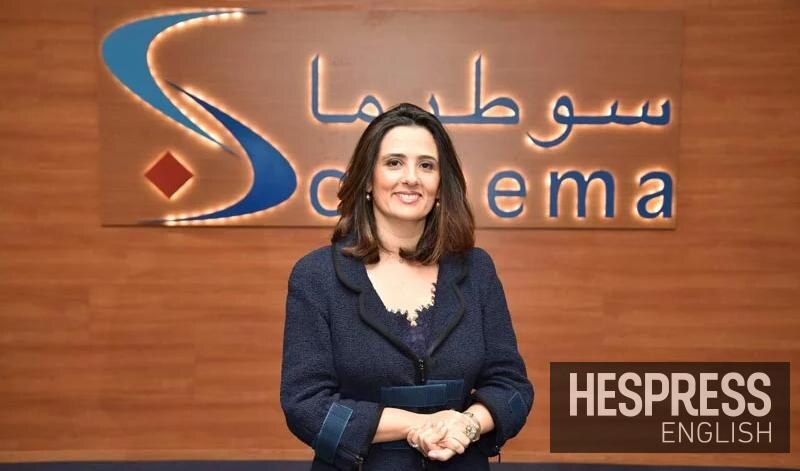
In 2019 the board of Sothema appointed Lamia Tazi Chairwoman of the Board and Chief Executive Officer. The change was reported publicly in January 2020. Omar Tazi, who had founded the company on 26 January 1976 and led it for more than four decades, moved to chair a newly created strategic committee charged with defining and monitoring the group’s strategic orientations.
The structure of that handover is worth reading carefully, because founder successions in listed family-controlled companies are among the most commonly mishandled transitions in corporate life. The familiar failure modes are well documented: a founder who leaves formally but not actually; a successor with authority on paper and none in practice; or a clean break that discards institutional knowledge along with the founder.
What Sothema’s board did instead was separate the two functions. Executive authority passed completely and unambiguously to the incoming chairwoman and chief executive. The founder’s accumulated strategic judgement was retained, but relocated into a defined committee with a defined remit — advisory in nature, distinct from executive command.
It is a design that answers the real question in any succession: not who is trusted, but who decides.
Two offices, cleanly separated
Executive authority — Chairwoman of the Board and CEO, held by Lamia Tazi from 2019.
Strategic counsel — a newly created strategic committee chaired by the founder, tasked with defining and monitoring strategic orientations.
Chapter V · 2019 to the present
The chairmanship in practice
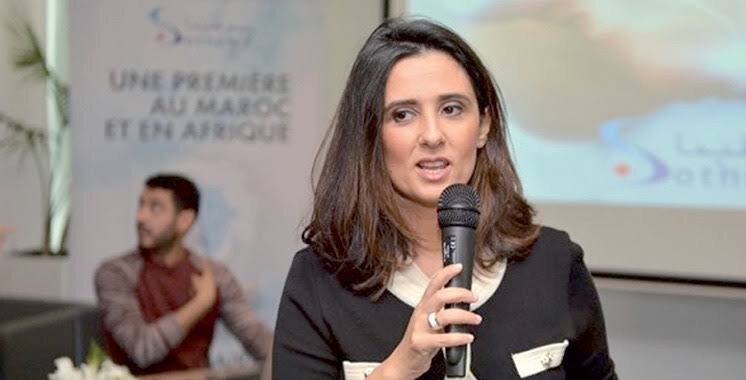
Six years in which the industry’s assumptions were tested harder than at any point in living memory.
-
2020–2021 · Pandemic
Supply held, and the argument changed
Through the pandemic the group reports having maintained its customer orders despite acute global supply pressure. Sothema was involved in securing vaccine supply for Morocco and conducted preliminary clinical work in connection with Sinopharm’s anti-COVID vaccine. The wider effect was rhetorical as much as operational: pharmaceutical manufacturing stopped being read as a private industry and started being read as national infrastructure.
-
September 2021 · Representation
Elected Vice-President of the FMIIP
Elected Vice-President General of the Moroccan Federation of the Pharmaceutical Industry and Innovation for a three-year mandate, alongside President Mohamed El Bouhmadi. The federation represents 34 operators covering more than 75% of the sector’s revenue.
-
June 2023 · Up the value chain
A development and clinical trials platform
Sothema joined Baylor College of Medicine, Dassault Systèmes, ReGenLab and Moroccan government ministries to establish what was announced as the first galenic development and clinical trials platform in Africa and the Middle East — a move from making medicines towards developing them.
-
October 2023 · The Gulf
Scientific office in Saudi Arabia
A scientific rather than purely commercial presence, consistent with a strategy of building registration and technical credibility in markets before selling into them at scale.
-
November 2024 · Capacity
New storage facility
A new storage facility opened, representing a reported investment of approximately 20 million US dollars — unglamorous infrastructure, and the precondition for everything upstream of it.
-
July 2025 · Acquisition
Soludia Maghreb
An agreement to acquire 99.99% of the capital of Soludia Maghreb, a leading Moroccan industrial player in haemodialysis founded in 1996, at an enterprise value of approximately one billion dirhams — close to 111 million US dollars. Following the transaction the group indicated consolidated 2025 revenue of around 3.5 billion dirhams.
Chronology
The career in one column
- University of Liège
- Degree in pharmacy, Belgium
- 1997
- Joins Sothema
- 1998
- Appointed responsible pharmacist — statutory accountability for product conformity
- Following years
- Promoted to Managing Director; turnover reported to multiply more than sixfold over her tenure
- 2019
- Appointed Chairwoman of the Board and Chief Executive Officer, succeeding founder Omar Tazi; announced publicly in January 2020
- September 2021
- Elected Vice-President General of the FMIIP for a three-year mandate
- 2022–2025
- Successive listings by Forbes Middle East across healthcare leadership and most powerful businesswomen rankings
- June 2023
- Galenic development and clinical trials platform announced with Baylor College of Medicine, Dassault Systèmes, ReGenLab and Moroccan ministries
- October 2023
- Scientific office opened in Saudi Arabia
- November 2024
- New storage facility opened, reported investment approximately US$20 million
- July 2025
- Agreement announced to acquire 99.99% of Soludia Maghreb, enterprise value approximately MAD 1 billion