Lamia Tazi Chairwoman & CEO · Sothema Contact

Executive Leadership

Authority earned in the technical detail

Pharmaceutical manufacturing punishes generalist management. Products are legally defined, processes are validated, plants are inspected, and every market has its own regulator. This is what leading such a business actually requires — and what Lamia Tazi’s documented decisions show about how she does it.

Office
Chairwoman of the Board & CEO
Company
Sothema, Bouskoura
Production units
Eight, per Forbes Middle East
Contract clients
35+ laboratories

A chief executive who cannot read a deviation report is managing a story about the company, not the company.

The Operating Model

Five pressures, held at once

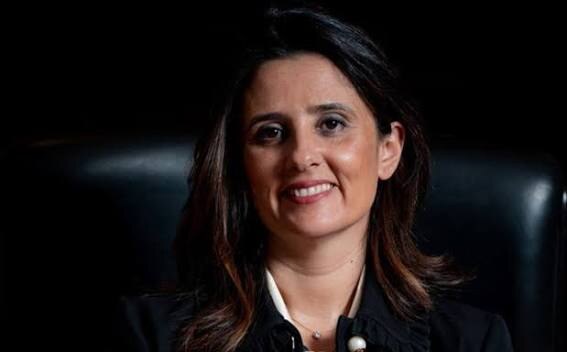
Low-key executive portrait of Lamia Tazi
01 · Regulatory
Permanent inspection readiness. A manufacturer holding marketing authorisations across the Maghreb, sub-Saharan Africa, the Gulf and Europe is subject to multiple inspectorates with non-identical expectations. There is no off-season. A single unresolved finding can suspend a site, not merely a product, and a suspended site stops supplying every market at once.
02 · Scientific
Category decisions made years early. Committing to aseptic biologics — insulin, heparins, monoclonal antibodies — means building suites, qualifying processes and training people long before the first authorised batch. The decision is taken on a scientific judgement about where therapy is heading, not on current demand.
03 · Industrial
Capacity, and the unglamorous infrastructure around it. Eight production units, thirteen pharmaceutical forms, a 60,000-square-metre principal site, and in November 2024 a new storage facility representing a reported investment of some US$20 million. Warehousing is not a headline. It is the constraint that decides whether the rest of the plant can run.
04 · Commercial
Two customers with opposite requirements. Contract clients — more than thirty-five laboratories, including major research-driven groups — demand audit-grade consistency. Domestic and regional health systems demand affordability. The same plant, the same quality system, has to satisfy both without compromising either.
05 · Institutional
The seat at the policy table. As Vice-President of the FMIIP and a board member of the CGEM, she operates where industrial policy for the sector is negotiated. In an industry where pricing, procurement and registration are set by public policy, that is not ceremonial work.
Executive Case Studies

Three decisions, read closely

Leadership is easier to assess through documented decisions than through description. These three are all publicly reported.

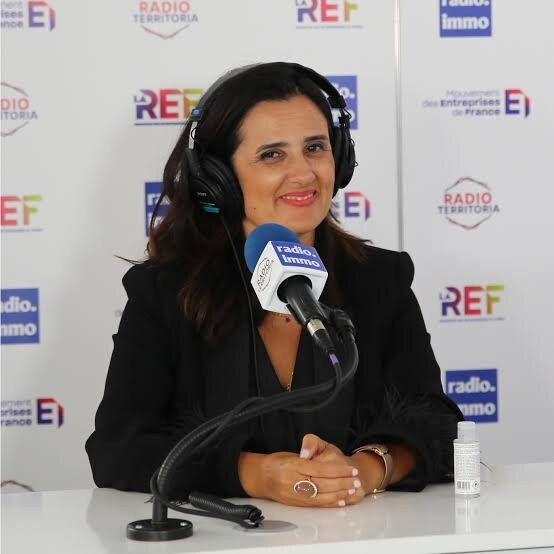
Lamia Tazi speaking into a microphone during a radio interview
Public communication as part of the executive role.
Case one

The pandemic, and what a supply chain is for

Between 2020 and 2021 global pharmaceutical supply chains failed in ways that had been theorised for years and never tested. Ingredient availability collapsed, freight capacity vanished, and export restrictions appeared overnight in countries that manufacture for the world.

Sothema’s reported position through that period was that it maintained all customer orders. The group was also involved in securing vaccine supply for Morocco and undertook preliminary clinical work in connection with Sinopharm’s anti-COVID vaccine.

The executive lesson she drew from it was not operational but political: “During the COVID-19 pandemic, we proved that our industry is vital not just to the health system but also to the economy.” That sentence relocated an entire sector’s claim on national attention.


Case two

Oncology biosimilars, and a multiple that matters

Biosimilar oncology medicines are among the hardest products a manufacturer can attempt. They are large, complex biological molecules; the analytical and clinical comparability requirements are demanding; and the capital cost is severe. Very few manufacturers on the African continent make them.

Sothema launched its own range of locally manufactured oncology treatments. Lamia Tazi has stated publicly that through these oncology biosimilars the company reaches six times more patients than the originator products had reached previously — at the same quality, at a fraction of the cost.

In most industries a sixfold increase in reach is a market-share statement. In oncology it is a statement about who receives treatment and who does not. The executive decision that produced it was taken years earlier, when the capability was funded.

Sothema is looking ahead by expanding our footprint geographically, broadening our portfolio and investing in innovative technologies.
Lamia Tazi — PharmaBoardroom
More patients reached through oncology biosimilars, per her public statement
13Pharmaceutical forms manufactured by the group

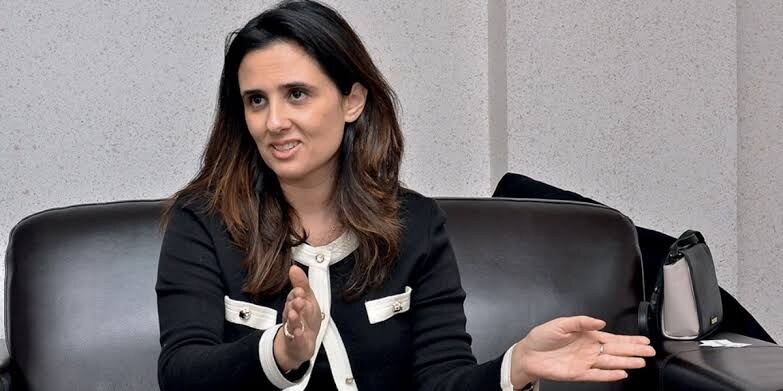
Lamia Tazi in discussion during a seated business meeting
Working dialogue — where acquisition logic is argued out.
Case three

Soludia Maghreb, and buying capability rather than revenue

In July 2025 Sothema announced an agreement to acquire 99.99% of the capital of Soludia Maghreb at an enterprise value of approximately one billion Moroccan dirhams — close to 111 million US dollars. Founded in 1996, Soludia is a leading Moroccan industrial player in haemodialysis, manufacturing powdered bicarbonate cartridges and liquid acid and bicarbonate solutions.

Read commercially, it adds revenue: Soludia was projected to generate around 360 million dirhams in 2025 with adjusted EBITDA of roughly 90 million, before synergies. Following the transaction the group indicated consolidated 2025 revenue of around 3.5 billion dirhams and consolidated EBITDA above 800 million.

Read strategically, it does something else. Haemodialysis consumables are a chronic-care necessity with inelastic demand and unforgiving quality requirements. Acquiring an established domestic manufacturer of them adds a therapeutic vertical, a different customer base in hospitals and dialysis centres, and manufacturing know-how that would take years to build. For thirty years the group had reportedly grown organically. This is a different instrument, used deliberately.

Disposition

How she talks about leading

Asked what young women entering leadership most need, her answer went to interior discipline rather than technique: they must first build faith in themselves, and “self-awareness is the first skill that every leader should have.”

It is a revealing answer for someone running a regulated manufacturer. Self-awareness, in this context, is not introspection for its own sake. It is knowing precisely where your own competence ends — a necessary faculty when you personally signed for product conformity, when you sit across from technology-transfer partners with deeper research budgets, and when the consequences of overestimating your own judgement are measured in patients rather than in quarters.

The same disposition shows in how the company’s capability has been built: through structured partnership and technology transfer rather than through claims of independent discovery. That is a leadership choice about what an organisation should honestly claim to be.

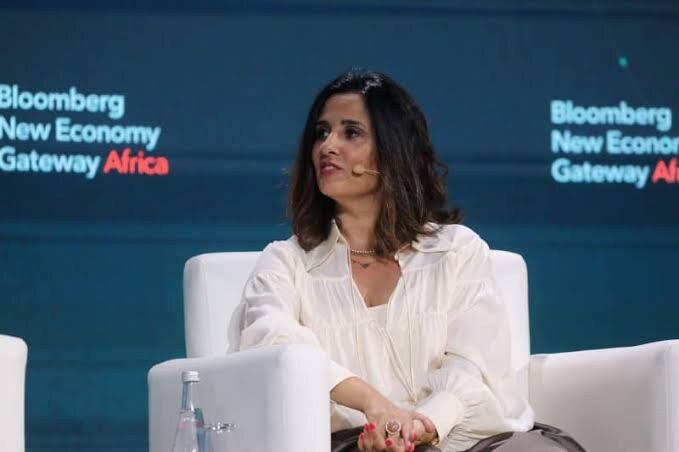
Lamia Tazi seated on stage during an international economic forum panel on Africa
On an international forum platform.