Lamia Tazi Chairwoman & CEO · Sothema Contact

Bouskoura · Morocco · Official Website

Lamia Tazi Chairwoman of the Board & Chief Executive Officer, Sothema

  • Pharmacist
  • Industrialist
  • Chief Executive
  • Board Chairwoman
  • Moroccan Business Leader

A pharmacist by training and an industrialist by vocation, Lamia Tazi leads Sothema — the first wholly Moroccan pharmaceutical manufacturer, founded in 1976, and today one of the most significant medicine producers in Africa and the Middle East. Her work sits at the point where scientific precision, industrial capability and public health meet.

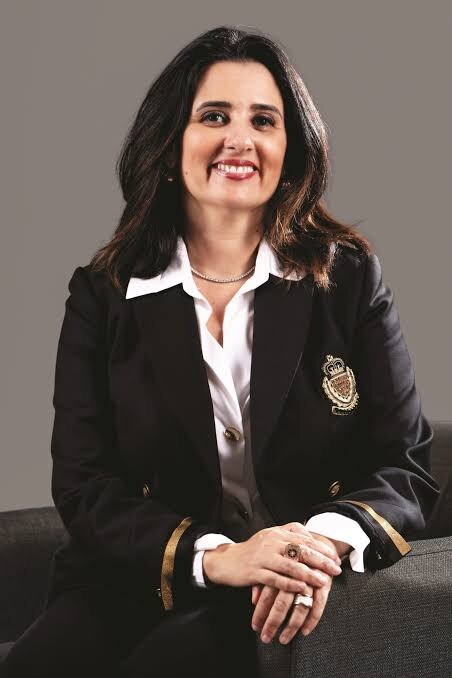
Lamia Tazi, Chairwoman of the Board and Chief Executive Officer of Sothema, seated in a formal executive portrait

Chairwoman & CEO since 2019

Company founded
1976Sothema founded in Bouskoura, Morocco
Year appointed
2019Appointed Chairwoman of the Board & CEO
Production units
8Production units operated by the group
Partner laboratories
35+International laboratories served under contract

Executive Introduction

A scientist who chose
the factory floor

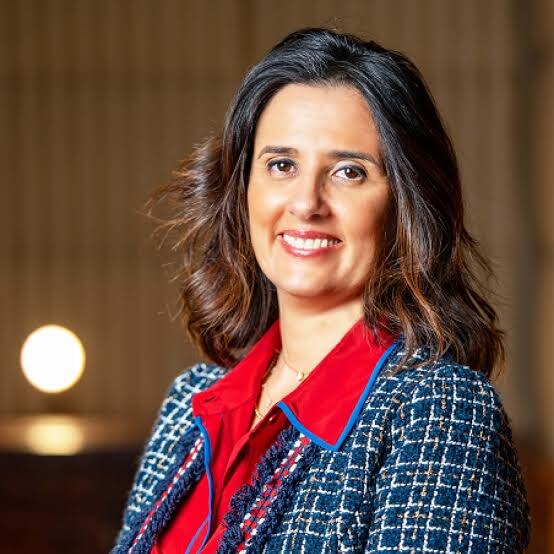
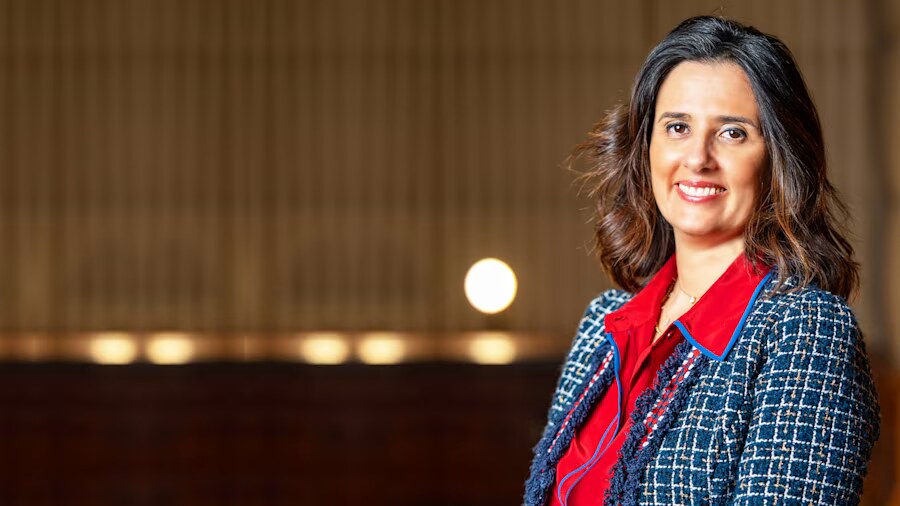
Lamia Tazi photographed in a warm interior setting, wearing a structured jacket

Lamia Tazi qualified as a pharmacist at the University of Liège in Belgium. She could have practised. Instead she went into manufacturing — into the part of medicine that most people never see, where sterile suites, batch records and cold chains decide whether a prescription written in Casablanca, Dakar or Dubai can actually be filled.

She joined Sothema in 1997 and took up the statutory role of responsible pharmacist — the officer personally accountable under Moroccan law for the quality and conformity of everything the company releases — the following year. It is a demanding way to learn a business. It means learning it from the inside of the quality system outwards, rather than from the balance sheet inwards.

Over the following two decades she rose to Managing Director and, in 2019, was appointed Chairwoman of the Board and Chief Executive Officer, succeeding the company’s founder, her father Omar Tazi, who moved to chair a newly created strategic committee. The transition was announced publicly in January 2020. It was a succession inside a family-founded, publicly listed company — a structure that carries particular governance obligations, and particular scrutiny.

What she inherited was already a national industrial asset. What she has built since is a regional one: a group operating eight production units, manufacturing under contract for more than thirty-five international laboratories, exporting across the Maghreb, sub-Saharan Africa, the Gulf and into Europe, and moving decisively into biotechnology — insulin, heparins, monoclonal antibodies, oncology biosimilars — categories that most manufacturers on the African continent still do not attempt.

Growth in Sothema’s turnover reported over the course of her tenure in the company’s senior leadership Source: PharmaBoardroom
165 → 57 Sothema’s reported movement in the ranking of Morocco’s 500 largest companies Source: PharmaBoardroom
60,000 m² Surface area of the group’s principal manufacturing site at Bouskoura Source: Sothema
Read the full profile

A Career in Leadership and Industry

Four movements in one working life

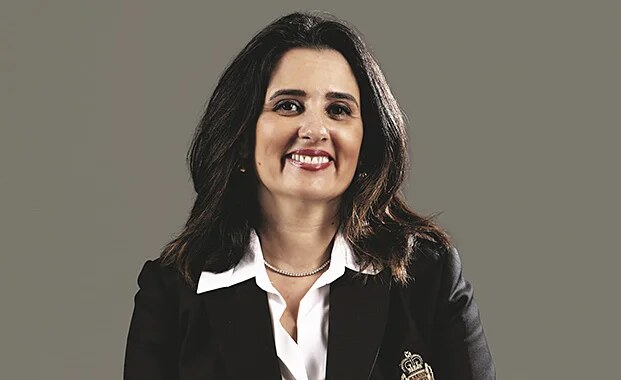
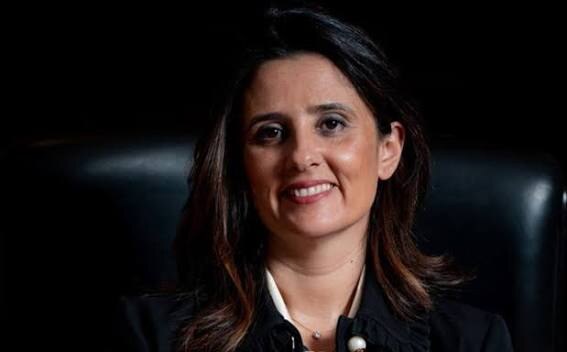
Lamia Tazi in a studio portrait against a dark background, wearing a black blazer
Lamia Tazi — Chairwoman of the Board and Chief Executive Officer, Sothema.
Sothema is looking ahead by expanding our footprint geographically, broadening our portfolio and investing in innovative technologies.
Lamia Tazi, interview with PharmaBoardroom
  1. The formation · University of Liège

    A pharmacist’s training, not a manager’s

    Her degree in pharmacy from the University of Liège in Belgium is the foundation of everything that follows. In a regulated manufacturing industry, technical literacy is not decoration — it decides whether a chief executive can interrogate a deviation report, a stability study or a technology transfer dossier without translation.

  2. 1997–1998 · Entry and accountability

    Inside the quality system

    She joined Sothema in 1997 and became the company’s responsible pharmacist in 1998. That statutory office places personal legal accountability for product conformity on one named individual. It is the least glamorous and most instructive place in a pharmaceutical company to begin.

  3. Two decades · Managing Director

    From compliance to command

    Promotion to Managing Director gave her the operational span — production, supply, export markets, partnerships with multinational principals — that later made the chairmanship a continuation rather than a leap. Over this period Sothema’s reported turnover multiplied more than sixfold.

  4. 2019 · The chair

    Chairwoman of the Board and Chief Executive Officer

    Appointed to lead a listed company through the most demanding decade the pharmaceutical sector has faced in living memory: a pandemic, a global supply shock, and a continent-wide reassessment of what it means to depend on imported medicine.

Pharmaceutical Leadership

Leading a regulated manufacturer is a different discipline

There is no version of this industry in which a chief executive can be indifferent to detail. Every batch is a legal act. Every export market is a separate regulatory jurisdiction. Every new molecule is a multi-year capital commitment made years before the first prescription.

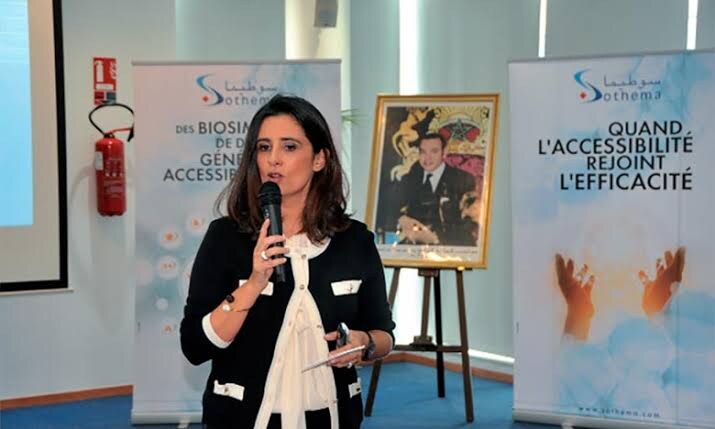
Lamia Tazi speaking at a Sothema launch event beneath banners reading Quand l'accessibilité rejoint l'efficacité
Addressing a Sothema launch centred on accessibility and therapeutic efficacy.
13 Pharmaceutical forms manufactured, including aseptic operations Source: Sothema
~60m Units of annual production capacity reported for the group Source: World Bank Live
During the COVID-19 pandemic, we proved that our industry is vital not just to the health system but also to the economy.
Lamia Tazi — PharmaBoardroom

Sothema manufactures in thirteen pharmaceutical forms and specialises in the aseptic environments required for injectable and biological medicines. That capability is what allows it to produce categories — insulin, heparins, monoclonal antibodies — that comparatively few manufacturers on the African continent are equipped to handle at all.

It also operates as a contract development and manufacturing organisation for more than thirty-five international laboratories, including several of the largest research-driven pharmaceutical groups in the world. That dual identity — proprietor of its own portfolio and manufacturer for others — is strategically deliberate. Contract work imports quality expectations, audit discipline and technology; the proprietary portfolio converts that discipline into affordable medicine for the domestic and regional market.

What the leadership job actually involves

  • Regulatory stewardship — maintaining marketing authorisations and site accreditations across dozens of jurisdictions simultaneously, each with its own inspection regime.
  • Capital sequencing — committing to production lines and biotechnology platforms five to ten years before they generate revenue.
  • Supply integrity — securing active pharmaceutical ingredients in a market where Africa imports more than 95% of its APIs, largely from India and China.
  • Scientific credibility — being able to sit with clinicians, regulators and technology-transfer partners as a peer rather than as a commercial counterpart.

Executive leadership in detail

Sothema & Professional Leadership

The company she chairs

Sothema — Société de Thérapeutique Marocaine — was founded on 26 January 1976 by Omar Tazi. It was the first wholly Moroccan pharmaceutical laboratory to operate as a genuine industrialist rather than a distributor, the first African producer of animal-origin insulin, and the first North African pharmaceutical company to list on a stock exchange, joining the Casablanca Stock Exchange in 2005.

Its principal site at Bouskoura extends over 60,000 square metres. From there the group supplies the Moroccan market, exports across the Maghreb, sub-Saharan Africa and the Persian Gulf, and manufactures under contract for European principals. It maintains a production site in Dakar, Senegal, offices in Côte d’Ivoire and Cameroon, and a scientific presence in Saudi Arabia.

This website is an independent editorial profile of Lamia Tazi’s publicly documented professional work. It is not operated by Sothema and is not the company’s corporate website.

Sothema in full

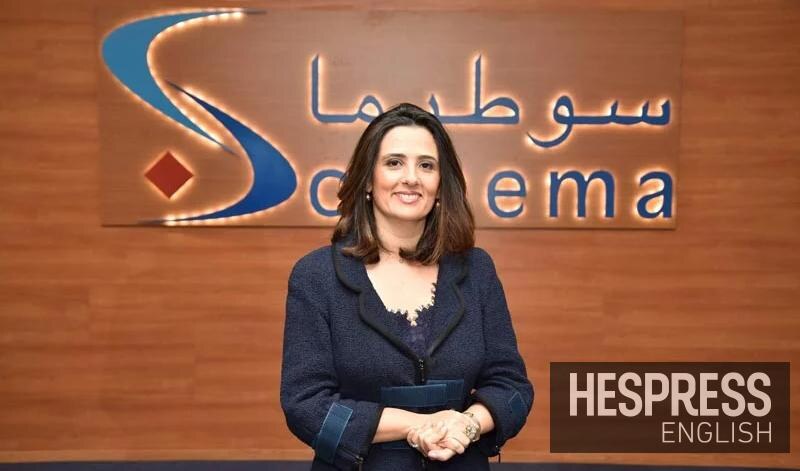
Lamia Tazi seated in front of the Sothema corporate identity during a broadcast interview
Founded
26 January 1976, by Omar Tazi
Headquarters
Bouskoura, Morocco
Listing
Casablanca Stock Exchange, since 2005
Pharmaceutical forms
13 distinct manufacturing forms
Contract clients
35+ national and international laboratories

Innovation & Industrial Development

Innovation, in this industry, means capability

Not a laboratory concept, but the ability to make a complex biological medicine, at scale, to an international standard, at a price a national health system can actually pay.

01

Biosimilars and oncology

Sothema has launched its own range of locally manufactured oncology treatments. Lamia Tazi has stated publicly that through these oncology biosimilars the company reaches six times more patients than the originator products had previously — at the same quality and a fraction of the cost. In oncology, that ratio is not a commercial statistic. It is a survival statistic.

02

Clinical and galenic infrastructure

In June 2023 Sothema joined Baylor College of Medicine, Dassault Systèmes, ReGenLab and Moroccan government ministries to establish what was announced as the first galenic development and clinical trials platform in Africa and the Middle East — moving the country up the value chain from manufacturing towards development.

03

Technology transfer as method

The group’s biotechnology capability has been built through structured partnerships with international laboratories rather than through isolated in-house discovery. Technology transfer is slower to negotiate and harder to execute than licensing — but it leaves permanent capability, and trained people, in the country that hosts it.

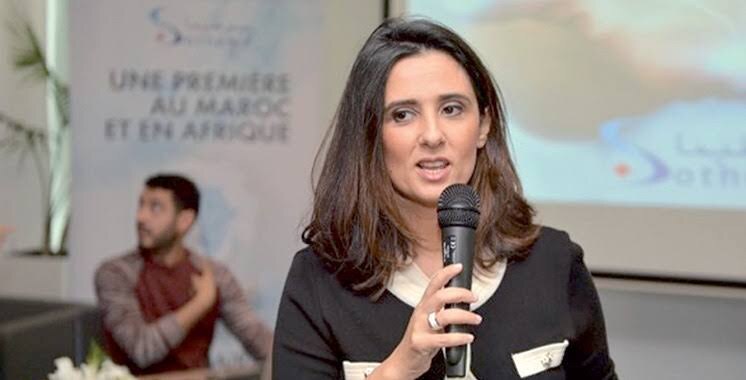
Lamia Tazi speaking with a microphone at a Sothema event announcing a first for Morocco and Africa
Announcing a development described by Sothema as a first for Morocco and for Africa.

Investment that shows on the ground

Industrial ambition is verifiable because it is expensive and visible. In November 2024 the group opened a new storage facility representing a reported investment of some 20 million US dollars. In July 2025 it announced an agreement to acquire 99.99% of the capital of Soludia Maghreb — a leading Moroccan industrial player in haemodialysis — at an enterprise value of approximately one billion Moroccan dirhams, close to 111 million US dollars.

Following that transaction the group indicated consolidated 2025 revenue of around 3.5 billion dirhams, roughly 350 million US dollars, with consolidated EBITDA above 800 million dirhams.

Innovation & industrial development

Leadership Principles

What her public record consistently shows

Drawn from her documented decisions and from statements she has made in published interviews. No principle here is invented on her behalf.

01

Self-awareness before authority

Asked what young women entering leadership most need, she has answered that they must first build faith in themselves, and that “self-awareness is the first skill that every leader should have.” It is an unusually unsentimental answer — it locates leadership in judgement rather than in title.

02

Long horizons over quarterly comfort

Biotechnology platforms, aseptic capacity and technology transfer all cost money years before they earn any. A listed company that commits to them is choosing a horizon its share price will not reward immediately.

03

Industry as public infrastructure

“During the COVID-19 pandemic, we proved that our industry is vital not just to the health system but also to the economy.” The argument reframes pharmaceutical manufacturing from a commercial sector into a component of national resilience.

04

Sovereignty as a practical goal

“Covid was a real crash test, and it showed what happens when you don’t have pharmaceutical sovereignty.” Sovereignty here is not rhetoric — it is plants, licences, trained staff and qualified supply chains, built deliberately over decades.

05

Capability built, not bought

Her stated strategy pairs geographic expansion with portfolio breadth and investment in innovative technologies — acquisitions used to add capability, not simply to add revenue.

Low-key portrait of Lamia Tazi against a dark background
They must first build faith in themselves. Self-awareness is the first skill that every leader should have.
Lamia Tazi, on advice to young women leaders — PharmaBoardroom
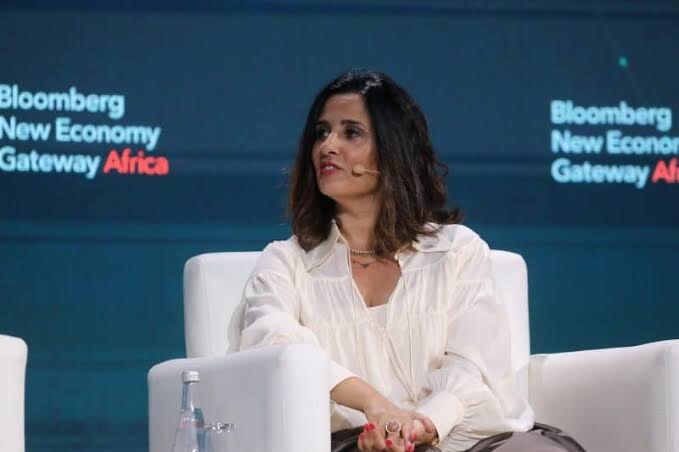
Lamia Tazi speaking on stage at the Bloomberg New Economy Gateway Africa forum
On the platform at an international economic forum on Africa.

Women in Leadership

Not a symbol. A specification.

Heavy industry, and pharmaceutical manufacturing in particular, remains one of the least gender-balanced parts of the global economy at executive level. It is capital-intensive, technically demanding, and frequently inherited. A woman running a listed industrial manufacturer — as the board’s chairwoman and its chief executive simultaneously — is still statistically rare anywhere in the world, and rarer still in the region.

Lamia Tazi has been named repeatedly on Forbes Middle East’s regional rankings: among the Top 50 Leaders Transforming Healthcare in 2022, the Top 100 Healthcare Leaders in 2023, and the 100 Most Powerful Businesswomen in both 2024 and 2025, placing 33rd in the 2025 edition. She has been described in coverage of one such ranking as the only female leader from Morocco to appear.

Her own framing of the subject is characteristically practical. She has emphasised self-belief and self-knowledge rather than representation for its own sake — the position taken by someone who expects to be assessed on the same technical and commercial terms as anyone else in the room.

Women in leadership

Africa & Regional Healthcare

A continent that imports its medicine

The structural facts of African pharmaceutical supply explain why industrial manufacturing on the continent is treated as a health-security question and not merely a commercial one.

70%+ of the pharmaceuticals consumed in Africa are imported, principally from Asia Source: Gavi / UNCTAD
95%+ of active pharmaceutical ingredients used on the continent are imported, mainly from India and China Source: Gavi
~690 pharmaceutical plants across Africa — with eight countries accounting for about 85% of them Source: UNCTAD
30–60% typical capacity utilisation in African pharmaceutical plants, against more than 70% in developed economies Source: UNCTAD
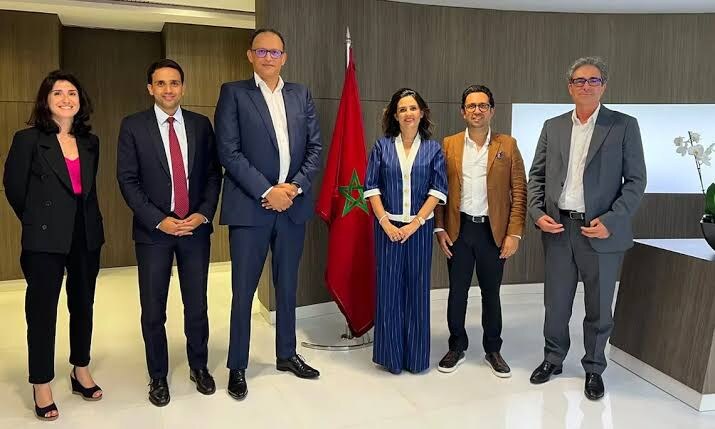
Lamia Tazi with colleagues at an institutional meeting beside the Moroccan flag
Institutional engagement — industry, government and regional partners.

Morocco is one of the exceptions to that continental pattern. Domestic production covers roughly 65% of the national pharmaceutical market, around a tenth of national output is exported, and Moroccan pharmaceutical products reach more than seventy countries. The sector’s turnover is estimated at 14 to 15 billion dirhams.

Sothema’s regional model extends that logic outward. Through its Senegalese subsidiary the group operates a production site in Dakar, combining local manufacturing with technology transfer and the training of African technical staff — a Moroccan–Senegalese arrangement that demonstrates how regional value chains can be assembled rather than imported.

Lamia Tazi’s assessment of what the pandemic exposed is direct: “Covid was a real crash test, and it showed what happens when you don’t have pharmaceutical sovereignty.”

Selected Milestones

A record that can be checked

Publicly reported milestones
YearMilestoneContext
1997Joins SothemaEntry into the family-founded pharmaceutical manufacturer
1998Appointed responsible pharmacistStatutory accountability for product conformity
2019Chairwoman of the Board & Chief Executive OfficerSucceeding founder Omar Tazi; announced publicly in January 2020
2021Elected Vice-President of the FMIIPMoroccan Federation of Pharmaceutical Industry and Innovation, September 2021
2022Forbes Middle East — Top 50 Leaders Transforming HealthcareRegional recognition
2023Galenic development and clinical trials platform announcedWith Baylor College of Medicine, Dassault Systèmes, ReGenLab and Moroccan ministries
2023Scientific office opened in Saudi ArabiaGulf market development
2024New storage facility openedReported investment of approximately US$20 million
2025Agreement to acquire 99.99% of Soludia MaghrebHaemodialysis; enterprise value approximately MAD 1 billion
2025Forbes Middle East — 100 Most Powerful Businesswomen, ranked 33rdAlso listed among Top Healthcare Leaders 2025

Gallery

In portrait and in public life

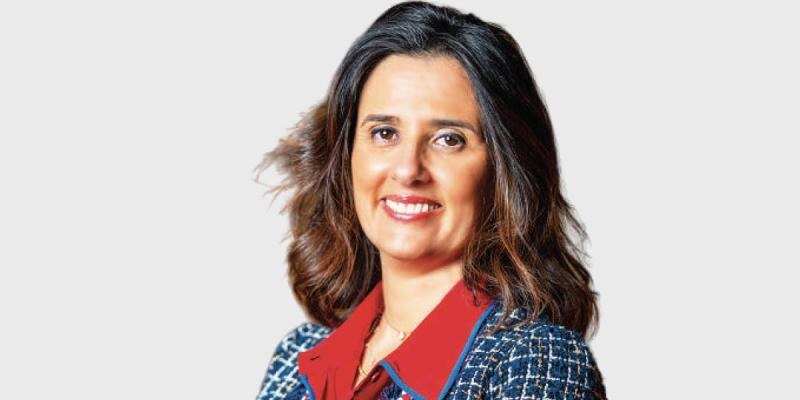
Lamia Tazi, corporate portrait against a light background
Corporate portrait
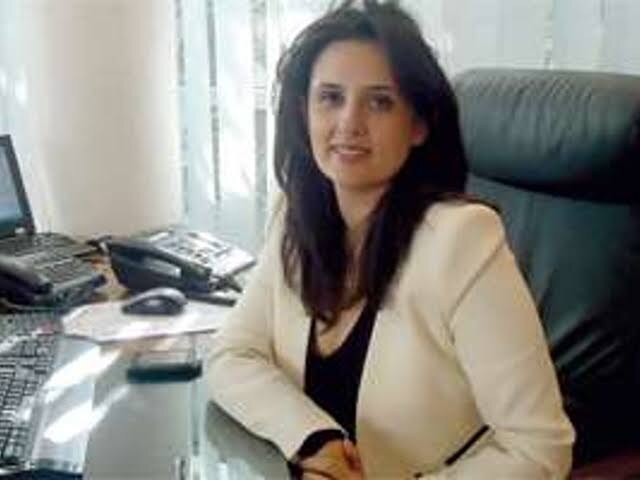
Lamia Tazi at her desk in an office
At work
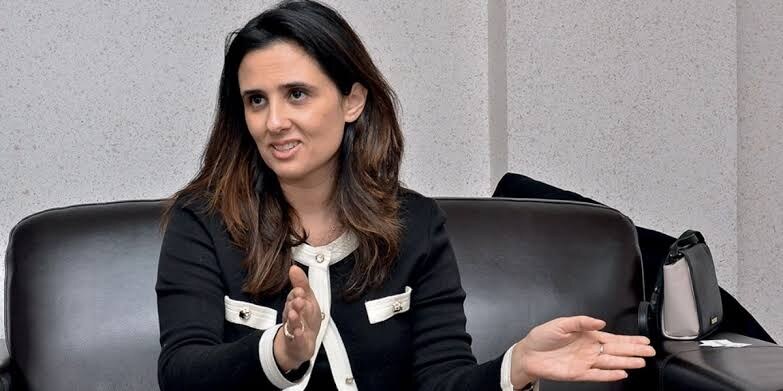
Lamia Tazi in conversation during a seated meeting
In conversation
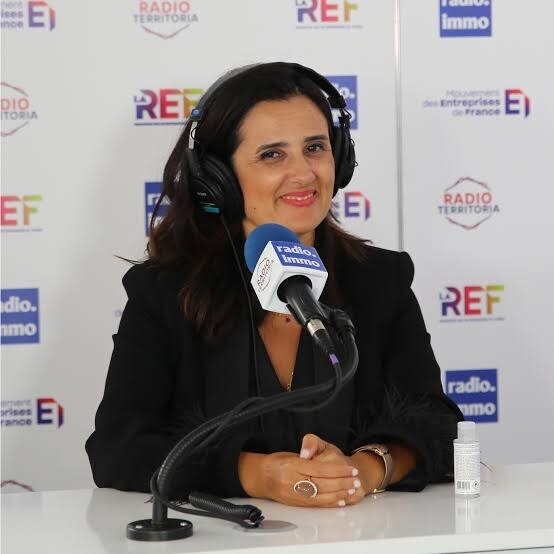
Lamia Tazi during a radio interview wearing headphones
Broadcast interview
Lamia Tazi in front of the Sothema corporate identity
Sothema
Lamia Tazi speaking on an international forum stage
International forum

Contact

Enquiries, media requests and correspondence

For editorial enquiries, media requests, research correspondence or speaking invitations relating to this website, please use the details below or the enquiry form on the contact page.

Lamia Tazi photographed at an evening event