Lamia Tazi Chairwoman & CEO · Sothema Contact

Innovation & Industrial Development

Innovation here is measured in capability

In pharmaceutical manufacturing, innovation is rarely a discovery. It is the ability to make something difficult, repeatedly, to an international standard, at a price a public health system can carry — and to do it in a place that previously could not.

Module 01 · Biotechnology

Insulin, heparins, monoclonal antibodies

Sothema’s specialisation in aseptic manufacturing environments is the foundation of everything else on this page. It is what allows the company to produce biological medicines — and it is described as the sole producer in Morocco of several of them, including insulin, heparins and monoclonal antibodies.

Insulin is where the story begins historically. Production started at Bouskoura in the early 1980s, making Sothema the first African producer of animal-origin insulin. Forty years later that early technical bet — on a biological product with punishing cold chain and quality requirements — explains why the company was able to move into biosimilars when the category matured.

Module 02 · Portfolio

A pipeline, not a catalogue

Reported publicly: a current range of around fifty products, twenty to thirty innovative biotechnology treatments, and roughly one hundred new products in the pipeline.

For a manufacturer of this size, a hundred-product pipeline is a statement about registration capacity as much as about science — each entry represents a dossier, a validation and a regulatory pathway in every market where it will be sold.

Module 03 · Development

The galenic platform

In June 2023 Sothema joined Baylor College of Medicine, Dassault Systèmes, ReGenLab and Moroccan government ministries to establish what was announced as the first galenic development and clinical trials platform in Africa and the Middle East.

Module 04 · Digital

Simulation in the design loop

The inclusion of Dassault Systèmes in that platform is significant. Simulation and digital modelling compress formulation development cycles — letting a formulation be examined computationally before it is made physically.

Module 05 · Clinical

Trials conducted locally

A domestic clinical trials capability keeps the evidence, the investigators and the data close to the populations the medicines will treat — and reduces dependence on trial infrastructure located elsewhere.

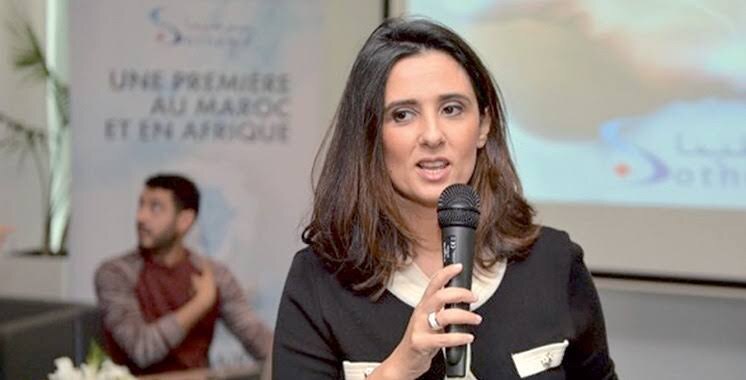
Lamia Tazi addressing an audience at a Sothema launch announcing a first for Morocco and Africa
Announcing a development described by the company as a first for Morocco and for Africa.

Deep Dive

Biosimilars: the hardest useful thing a manufacturer can do

A generic small-molecule medicine can be made chemically identical to the original. A biosimilar cannot. Biological medicines are produced by living cell systems, and no two production systems yield molecules that are structurally identical. A biosimilar must therefore be demonstrated to be highly similar, with no clinically meaningful differences in safety, purity or potency — an evidentiary burden that is orders of magnitude heavier than for a conventional generic.

That burden is why biosimilar manufacture is concentrated in a small number of countries, and why almost none of it happens in Africa. It requires cell-line handling, upstream and downstream bioprocessing, extensive analytical characterisation, comparative clinical work and an aseptic fill-finish operation — each of which is a discipline in its own right.

Why the effort is worth it

Originator biologics are priced for the reimbursement systems of high-income countries. In oncology in particular, that pricing places entire classes of treatment out of reach for public health systems elsewhere — not partially, but absolutely.

Sothema launched its own range of locally manufactured oncology treatments. Lamia Tazi has stated publicly that through these oncology biosimilars the company reaches six times more patients than the originator products previously reached, delivering the same quality at a fraction of the cost.

A sixfold increase in reach, in oncology, is not a commercial metric. It is a description of who now receives treatment.
Method

Technology transfer, and why it is the slower right answer

There are three ways to obtain a capability you do not have. Only one of them leaves you able to do it yourself afterwards.

Route A

Import the finished product

Fastest and cheapest to arrange. Adds freight, tariffs, currency exposure and distributor margin to the price. Leaves no capability behind, and no protection when export restrictions appear.

Route B

Licence and pack locally

Some local value added, some employment created. But the process knowledge stays with the licensor, and the arrangement ends when the licence does.

Route C

Transfer the technology

Slowest to negotiate, hardest to execute, most expensive to absorb. Requires the receiving plant to reach the transferring party’s standard. And it is the only route that leaves permanent capability — and trained people — in the country that hosts it.

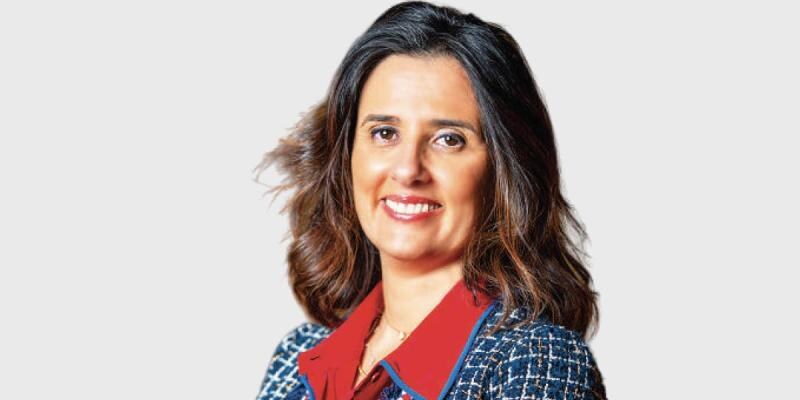
Lamia Tazi in a corporate portrait against a light background

Sothema’s biotechnology capability has been built through strategic partnerships with leading pharmaceutical companies for technology transfer, and reinforced by its work as a contract manufacturer for more than thirty-five international laboratories. Both mechanisms move know-how in the same direction: into the plant, into the quality system, and into the people who operate them.

The same method is being exported. Through its Senegalese subsidiary, the group has deployed an integrated model in Dakar combining local production, technology transfer and the upskilling of African technical staff — a Moroccan–Senegalese arrangement presented as evidence that the continent can assemble regional value chains rather than import finished ones.

It is worth being precise about what this is and is not. It is not original drug discovery, and it is not claimed to be. It is industrial capability acquisition, executed deliberately and at scale — which, for a market where more than 70% of medicines are imported, is the more consequential of the two.

Adjacencies

Where the group has signalled it is looking next

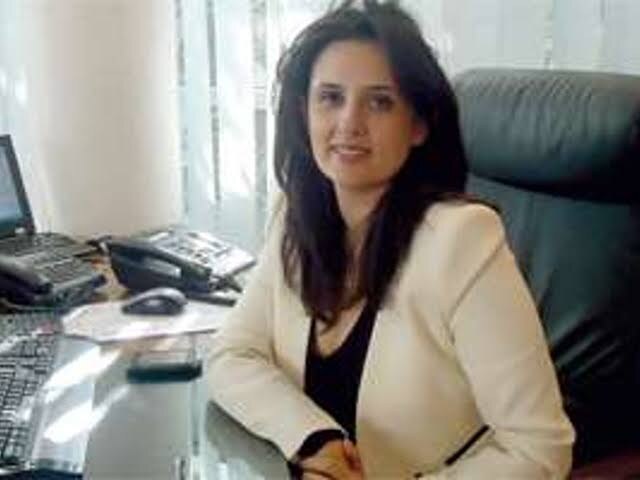
Lamia Tazi at her desk in an office setting

Publicly stated directions of travel, reported in interview rather than inferred.

  • Medical devices. The group has reported holding a 40% stake in a company producing syringes and masks — consumables whose absence during the pandemic proved as disruptive as any medicine shortage.
  • Haemodialysis. The July 2025 agreement to acquire 99.99% of Soludia Maghreb adds industrial manufacture of bicarbonate cartridges and acid and bicarbonate solutions for dialysis — chronic-care consumables with inelastic demand.
  • Vaccines and clinical studies. Named among the group’s focus areas alongside generics, biosimilars and biotherapeutics, and supported by the 2023 clinical trials platform.
  • Cannabis and medicinal herbs. Identified as areas of future investment interest, consistent with Morocco’s regulated framework for legal cannabis cultivation for medical and industrial use.
  • Artificial intelligence start-ups. Also named as a future investment interest — in a manufacturing context, most immediately relevant to process analytics, quality prediction and formulation modelling.
  • Geographic expansion by acquisition. Interest reported in East Africa, South Africa, the Gulf and potentially Europe, after some four decades of principally organic growth.

Read together, these are not diversifications away from the core business. They are extensions of the same proposition: control more of what a health system needs, manufacture it closer to where it is used, and reduce the number of points at which supply can fail.

The regional case