Business Strategy & Governance
Structure is the strategy
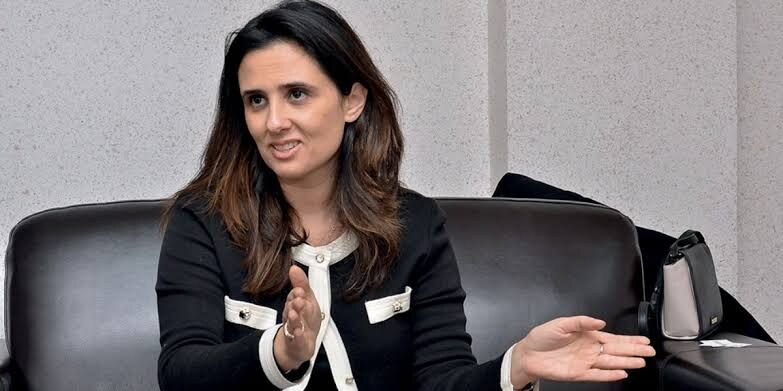
A listed, family-founded pharmaceutical manufacturer answers to four different constituencies at once: regulators, minority shareholders, patients and the family that built it. How those claims are ordered is a governance question, and it determines what the company is able to do.
Architecture
Five layers of accountability
Each layer answers to a different authority. None of them can be traded against another.
The responsible pharmacist
Moroccan pharmaceutical law requires a named, qualified pharmacist to be personally accountable for the conformity of what a manufacturing establishment releases. This is not a delegable committee function. Lamia Tazi held this office at Sothema from 1998 and is reported to have continued in it after promotion to general management.
Site and product authorisations
Manufacturing authorisation, Good Manufacturing Practice compliance, and a separate marketing authorisation for every product in every country. A finding at site level can suspend supply to every market simultaneously — which makes inspection readiness a board-level exposure, not an operational one.
The board and the market
Sothema listed on the Casablanca Stock Exchange in 2005 — the first North African pharmaceutical company to do so. Listing imposes periodic disclosure, market-sensitive announcement obligations and minority-shareholder protections that private family firms never encounter. Acquisitions, capital projects and results are argued in public.
The strategic committee
Created by the board in the 2019–2020 transition and chaired by founder Omar Tazi, with a defined remit to define and monitor the group’s strategic orientations — deliberately separated from executive authority.
Industry representation
As Vice-President of the FMIIP — a federation representing 34 operators covering more than 75% of the sector’s revenue — and as a board member of the CGEM, she participates in the negotiation of the policy framework the company then operates inside. That dual position carries its own governance discipline.
Case Study
The succession problem, and one answer to it
Founder succession is the single most reliably mishandled event in the life of a family-controlled company. It is mishandled in three characteristic ways.
The three failure modes
- The shadow founder. The founder steps back formally but continues to decide informally. Staff learn quickly whose approval actually matters, and the successor governs a company that does not fully report to them.
- The hollow appointment. The successor receives the title without the authority. Every significant decision is escalated. The organisation stalls.
- The clean break. The founder leaves entirely, and four decades of accumulated judgement about markets, regulators, partners and people leaves with them.
What Sothema’s board did instead
The 2019 arrangement separated the two functions explicitly. Executive authority passed completely to Lamia Tazi as Chairwoman of the Board and Chief Executive Officer. The founder’s strategic judgement was retained, but relocated into a newly created committee with a stated remit — defining and monitoring strategic orientations — that is advisory in character and structurally distinct from executive command.
The design answers the question that actually matters in a succession. Not who is respected, but who decides. And because Sothema is listed, the answer had to be stated publicly rather than understood privately.
The successor’s own record made the arrangement credible. Twenty-two years inside the company, the statutory quality office held personally, and a period of operating leadership during which turnover is reported to have multiplied more than sixfold — that is an internal appointment made on demonstrated performance, and it is defensible to a market as well as to a family.
Strategy
Four commitments, and what each one costs
Her publicly stated strategy is short: expand the footprint geographically, broaden the portfolio, invest in innovative technologies. Each has a price attached.
| Commitment | Evidence | Governance implication |
|---|---|---|
| Geographic expansion | Production in Dakar; offices in Côte d’Ivoire and Cameroon; scientific office in Saudi Arabia, October 2023; reported interest in East Africa, South Africa, the Gulf and potentially Europe | Multiplies regulatory jurisdictions, each with its own inspectorate and registration regime |
| Portfolio breadth | Around 50 products in range, 20–30 innovative biotechnology treatments, roughly 100 in pipeline; oncology biosimilars launched | Each product is a separate dossier, validation and lifecycle obligation in every market |
| Investment in technology | Galenic development and clinical trials platform, June 2023; storage facility at approximately US$20 million, November 2024 | Capital committed years before revenue, in a company whose results are reported quarterly |
| Growth by acquisition | Agreement to acquire 99.99% of Soludia Maghreb, July 2025, enterprise value approximately MAD 1 billion | A departure from decades of principally organic growth; integration risk, and a market that will judge it |
Capital discipline, read from the record
Following the Soludia Maghreb transaction the group indicated consolidated 2025 revenue of around 3.5 billion dirhams — roughly 350 million US dollars — with consolidated EBITDA above 800 million dirhams. Soludia itself was projected to contribute around 360 million dirhams of revenue with adjusted EBITDA of approximately 90 million, before synergies.
What that arithmetic shows is an acquisition priced against a margin profile the acquirer already understands, in a therapeutic area with predictable chronic demand. It is a conservative use of an aggressive instrument.
Institutional Roles
Governing beyond the company
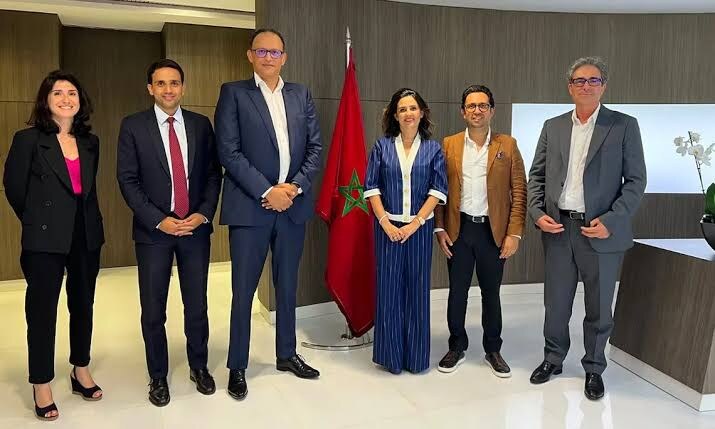
In a sector where prices, procurement rules and registration pathways are set by public policy, industry representation is a governance function rather than a ceremonial one. Lamia Tazi holds several such positions.
- FMIIP — Vice-President General of the Moroccan Federation of the Pharmaceutical Industry and Innovation, elected in September 2021 for a three-year mandate alongside President Mohamed El Bouhmadi. The federation represents 34 operators covering more than 75% of sector revenue.
- CGEM — board member of the General Confederation of Moroccan Enterprises, the country’s principal employers’ organisation.
- ASMEX — executive bureau member of the Moroccan Association of Exporters, reflecting the export orientation of the industry she represents.
- AMIP — previously Vice-President of the Moroccan Association of the Pharmaceutical Industry.
Alongside these she holds board positions across the group and its affiliates: Managing Director of Advanced Scientific Developments, and board roles at West Afric Pharma in Senegal, Azerys and Axess Pharma in Morocco, and Leiden Pharma in the Netherlands.